WHAT ARE YOU LOOKING FOR?
WHAT ARE YOU LOOKING FOR?
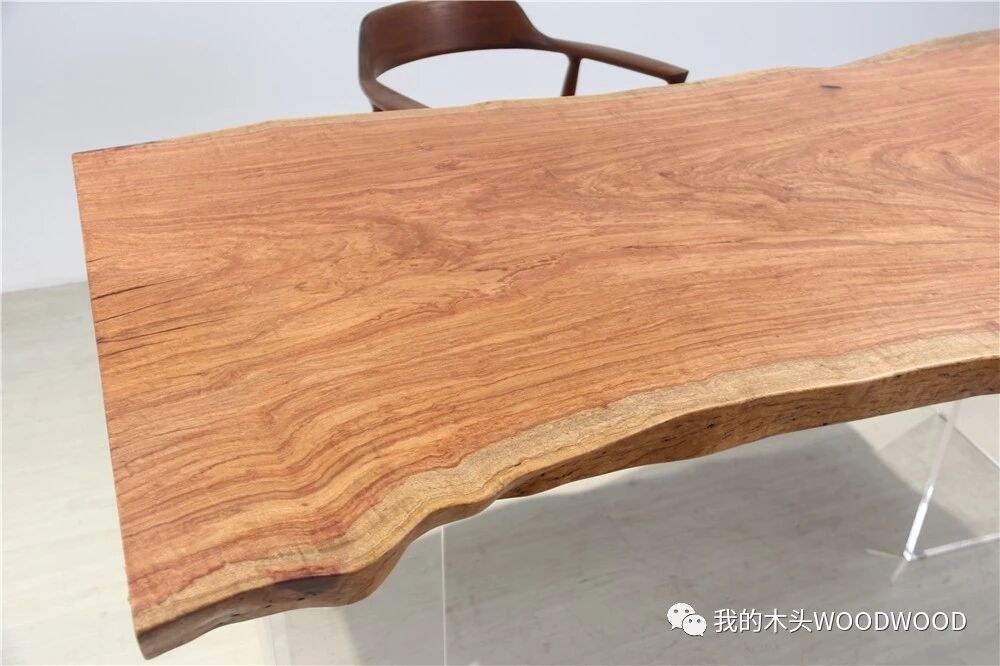
Small Bubinga: Elegant, Understated, and a Perfect Balance of Trend and Heritage
Big bubinga slabs get all the attention — yet this harder, denser cousin holds its own, with fine even grain, warm pink-brown tones and a price that makes it a real alternative to rosewood.
Chinese name: Small Bubinga
Also known as: East African rosewood, Rhodesian copalwood, African mahogany
Kingdom: Plantae
Division: Angiosperms
Class: Dicotyledons
Order: Fabales
Family: Fabaceae
Subfamily: Caesalpinioideae
Genus: Caesalpinia
Air-dry density: approx. 0.8–0.96 g/cm³
Distribution: Zambia, Angola, southern Congo, Mozambique, Namibia and other African countries
The Chinese botanical name of Small Bubinga is Guibourtia coleosperma. It ranks among the premium members of the roughly fifteen species traded as bubinga, and is one of the most dimensionally stable of them — the other name famous for stability being Guibourtia ehie.
As supplies of natural material dwindle and timber costs climb steeply, Small Bubinga has come forward as a substitute for rosewood: the grain is close to that of padauk-type rosewood, it carries no distinctive odour, and the price stays reasonable. That is why more and more factories in China have begun producing and promoting Small Bubinga furniture, flooring and household objects in recent years.
Let's look at what makes Small Bubinga stand out.
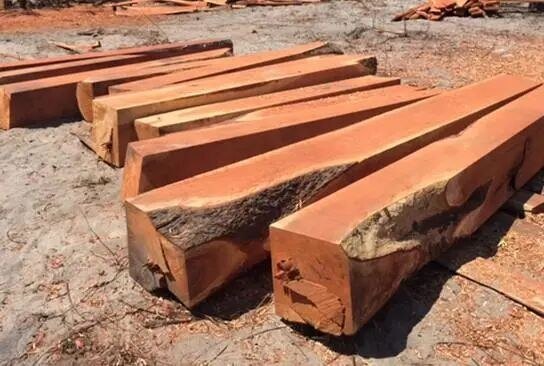
1. With a fine, even structure and high hardness and strength, Small Bubinga is rarely troubled by termites — in some respects it can hold its own against Burmese rosewood.
2. Its resistance to decay and to abrasion is excellent; wear resistance in particular outdoes certain rosewoods, which makes the timber well suited to flooring.
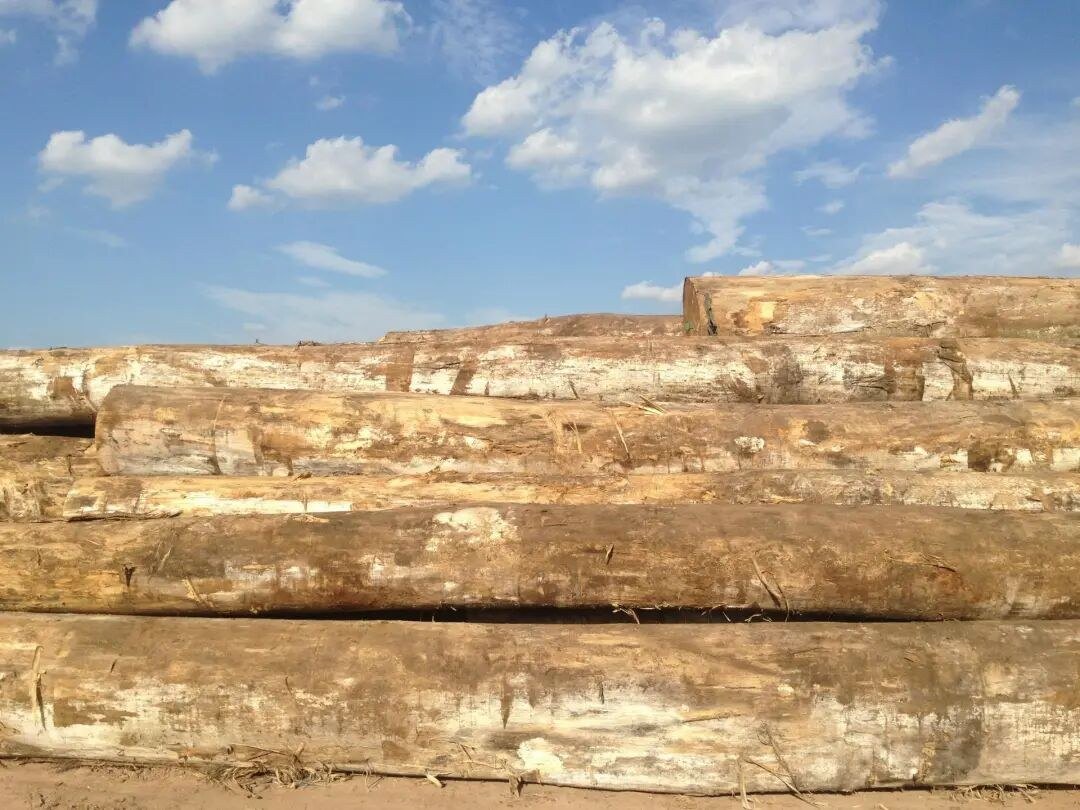
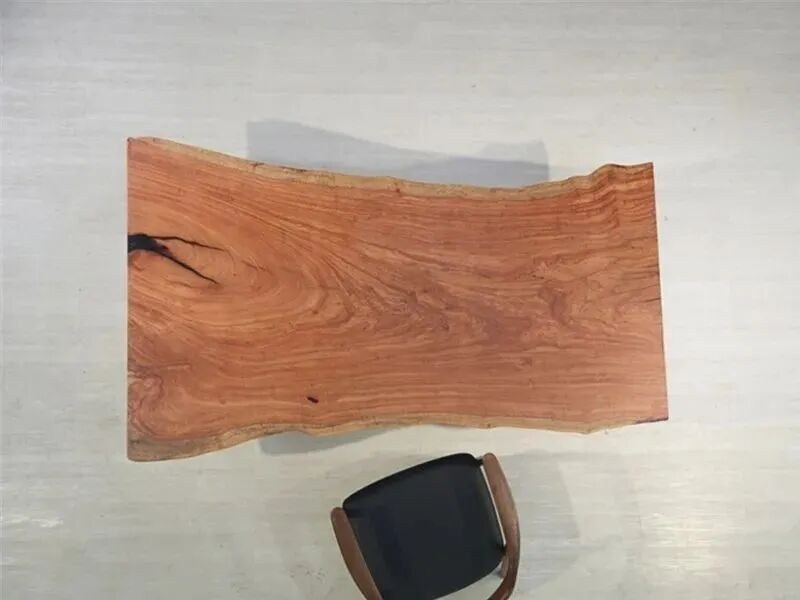
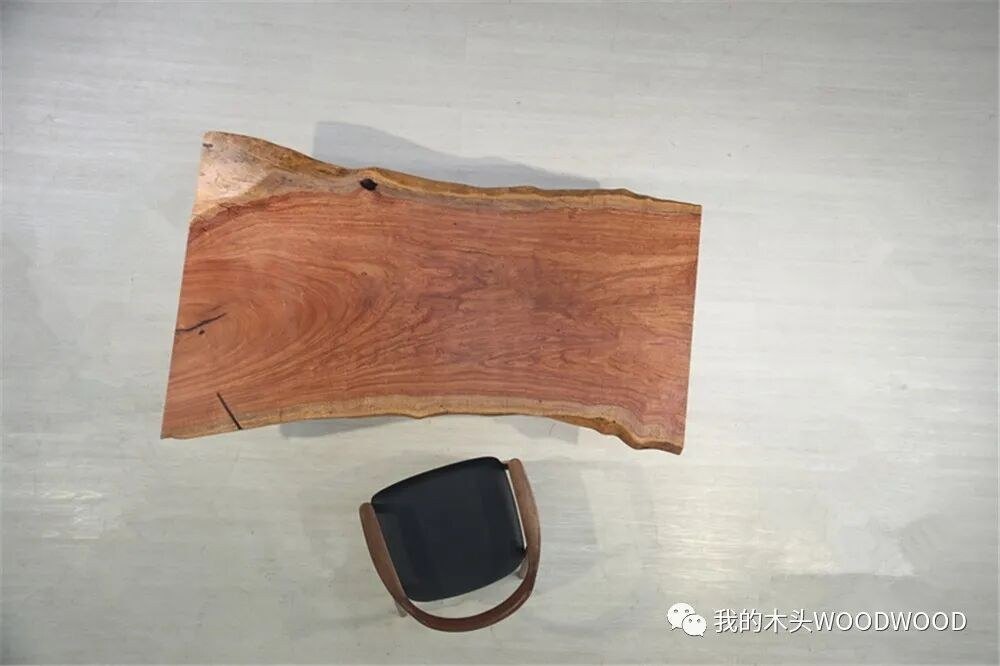
3. Small Bubinga often carries knots which, once worked, open into strikingly beautiful curled figure. Its sapwood and heartwood are also clearly divided: the sapwood pale creamy yellow, the heartwood light red or brown, threaded with fine deep red-brown streaks — quite distinctive.
"My Wood" Small Bubinga slab table
4. Freshly sawn, Small Bubinga is pink-brown, occasionally with purple-black streaks. With time the pink-brown areas deepen towards red while the purple-black streaks gradually soften.
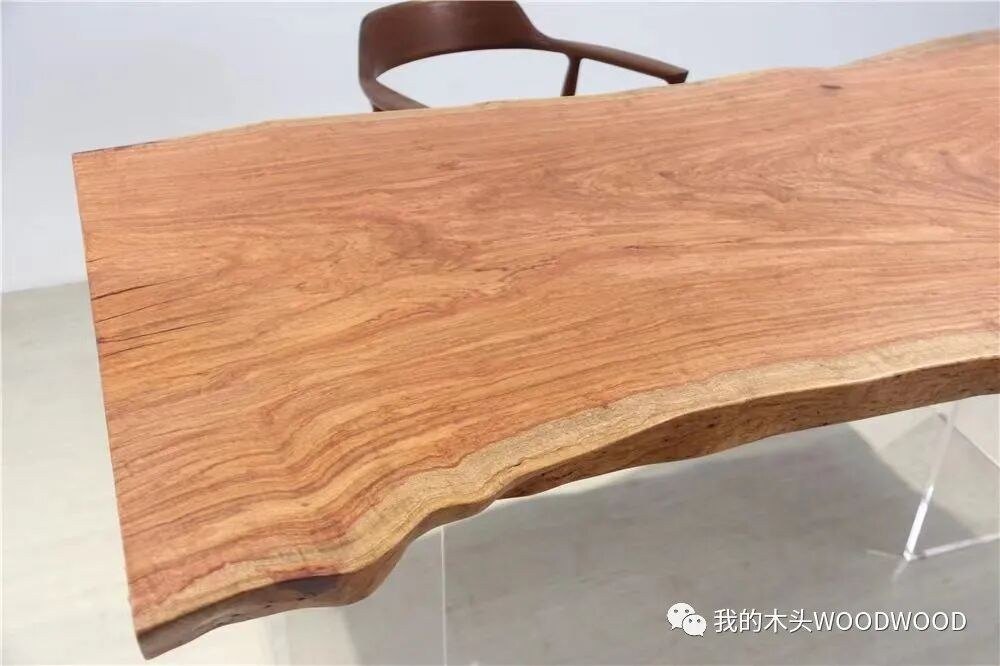
5. Small Bubinga takes up water a little less readily than black walnut. In a water-drop test the mark spreads more slowly, and once the drop has evaporated naturally it leaves no stain on the surface.
"My Wood" Small Bubinga slab table
As for the drawbacks —
1. Movement is moderate, with a tangential change of up to 7%. Many specialists agree that in practice Small Bubinga moves rather a lot, so timber needs careful drying after felling, and generous allowance for movement should be built into the making.
2. The grain is interlocked and close. Sanding does not demand the hardening agents needed to bring out a fine surface on Burmese or Asian rosewood, but careless handling will still raise torn fibres.
"My Wood" Small Bubinga slab table
Interior design in recent years has moved steadily towards the natural and the unadorned — wood tones, browns, nude shades, black-greys, the whole family of earth colours applied at scale. Seen often enough, they begin to feel uniform.
Small Bubinga, though, has a touch of the chameleon about it. As the colour temperature of the lighting shifts and the years pass, the changes it reveals are exactly the surprise that keeps a room distinctive without ever shouting.
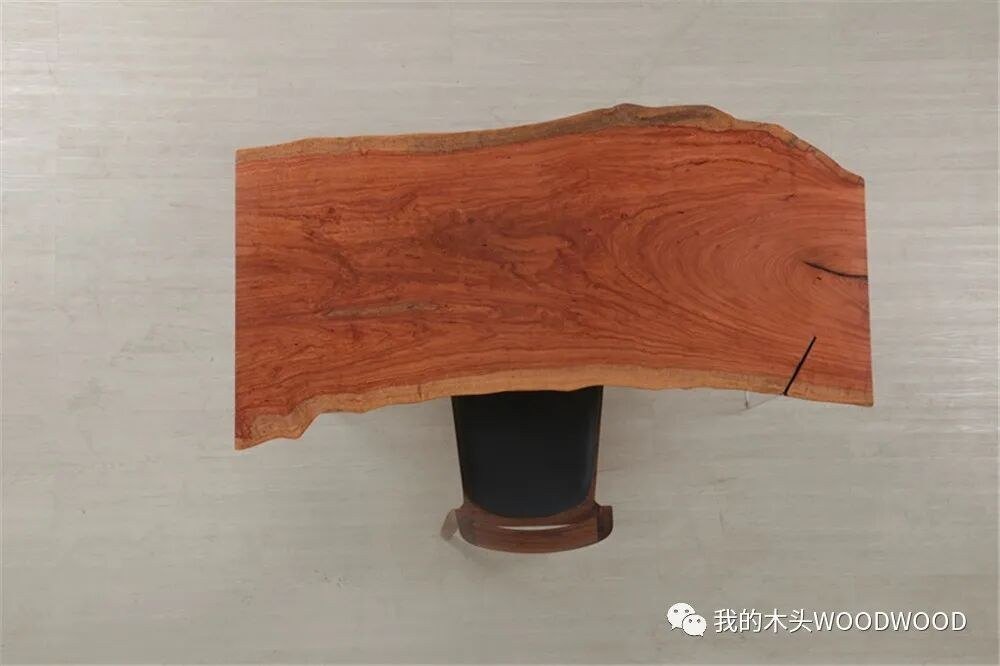
"My Wood" Small Bubinga slab table
At first the ground is a pale pink-brown with clear figure, reading from a distance like a hand-painted striped panel. Set against matte solids — charcoal, ink green, deep brown — it looks precise and elegant, and lifts those flat colours into something more considered and more literary.
"My Wood" Small Bubinga slab table
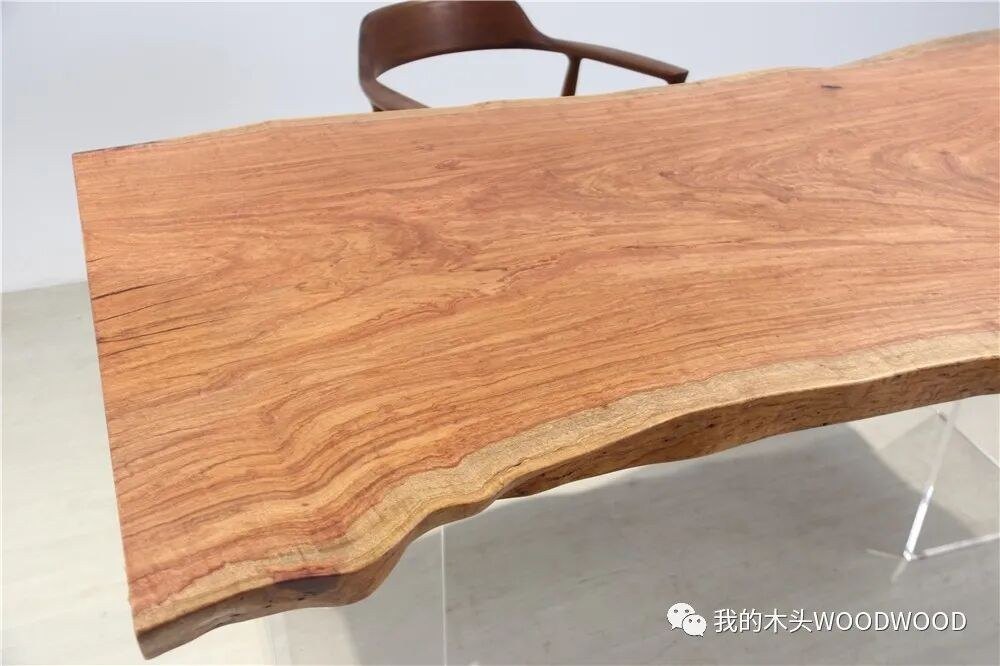
Against white or pale coffee tones, choose a darker slab with a red-orange cast. It is less heavy and less translucent than rosewood; its figure and colour sit somewhere between vintage European and new Chinese style, holding trend and period character together in one conciliatory gesture.
"My Wood" Small Bubinga slab table
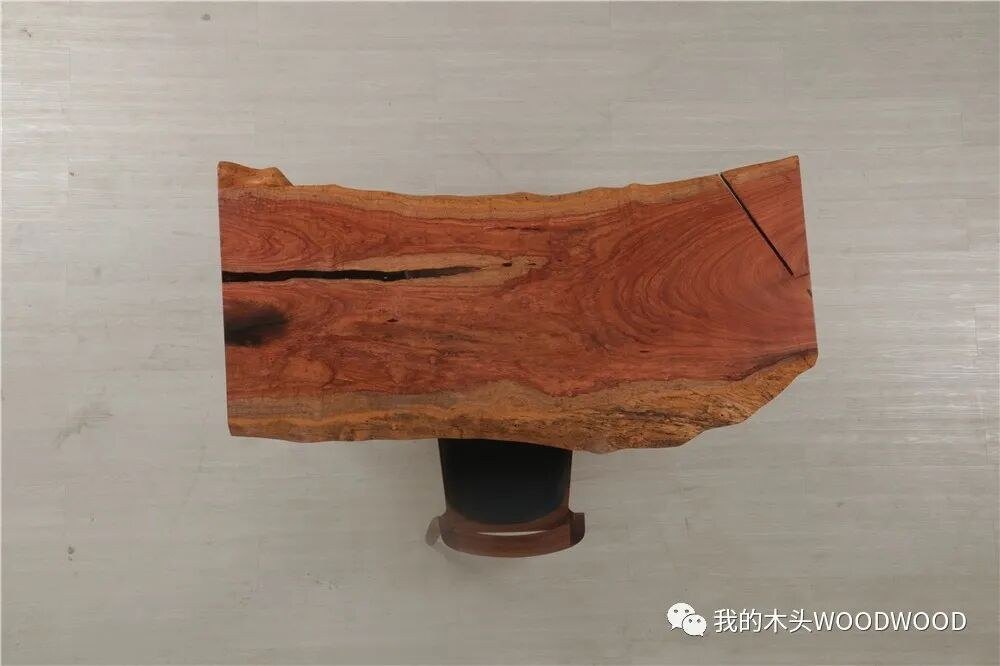
Rebuilding the artistic atmosphere of a home on the strength of the material itself — can you feel the beauty of Small Bubinga?
Many species
Many choices
Follow "My Wood"
2021 — we keep exploring the many faces of wood!

SEELAND WOOD LTD
B Block, Southern Ninth Street, Qiaotou Town, Dongguan city, Guangdong Province, China