WHAT ARE YOU LOOKING FOR?
WHAT ARE YOU LOOKING FOR?
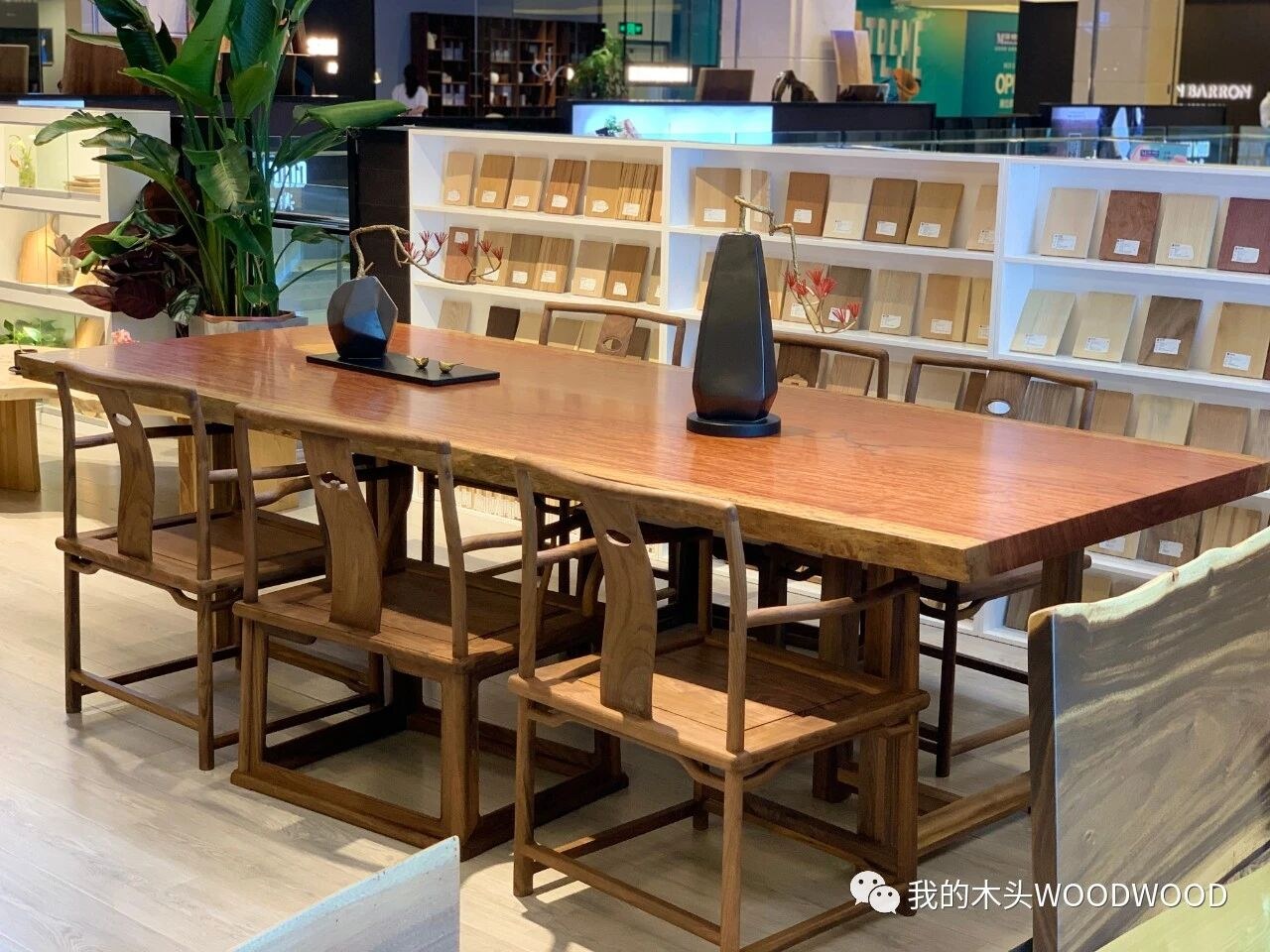
Has the Naturally Rustic Bubinga Slab Become a New Collector's Favorite?
Known in Chinese as “Brazilian rosewood,” Bubinga has lately become a favorite of collectors, prized for its composed density and spectacular figure.
At first, Bubinga pieces were mostly seen in upscale settings — corporate offices, hotels, private clubs. In the past two years, as villas and large flats have been fitted out, many owners have begun placing a fine Bubinga slab in the living or dining room.
Whether the look is sleek, minimal and quietly luxurious or an elaborate, opulent residence, its composed wood and brilliant figure deliver an immediate sense of force — of something firmly rooted, with depth of culture behind it.
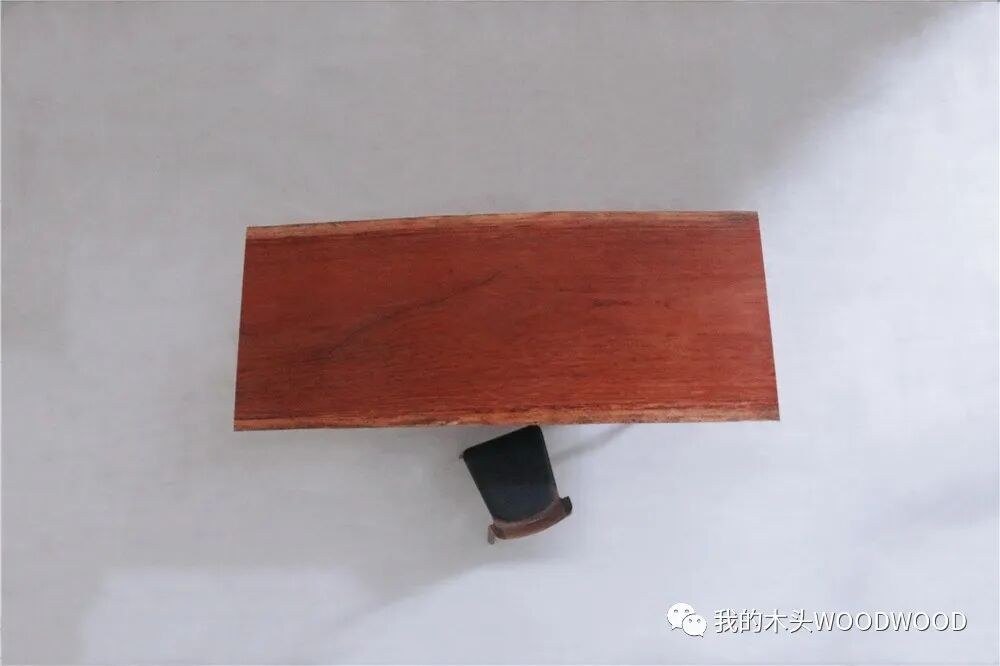
A finished My Wood Bubinga slab
For solid slab tables, Bubinga — called “Brazilian rosewood” in Chinese — has an advantage that is entirely natural: the tree can grow enormous, and in some African rosewood markets specimens of several dozen tons are still found. A single slab can become a table or a large piece of furniture without any joining, making it more durable, with a grain that runs uninterrupted.
Bubinga at a glance
Origin: the Congo River basin of west-central Africa — Congo, Gabon, Cameroon, Equatorial Guinea and the Central African Republic.
Air-dry density: about 0.80–0.86 g/cm³ (green wood can reach 1.2 g/cm³)
Similar species: Erythrophleum, Afzelia, and the sub-rosewood group
Bubinga carries light brown striping, has no distinctive odor, a fine even structure, and is hard and strong — termite damage is rare.
In working and sanding it shows considerable shrinkage, yet holds nails and screws well; it dries fairly quickly and is not prone to cracking or warping.
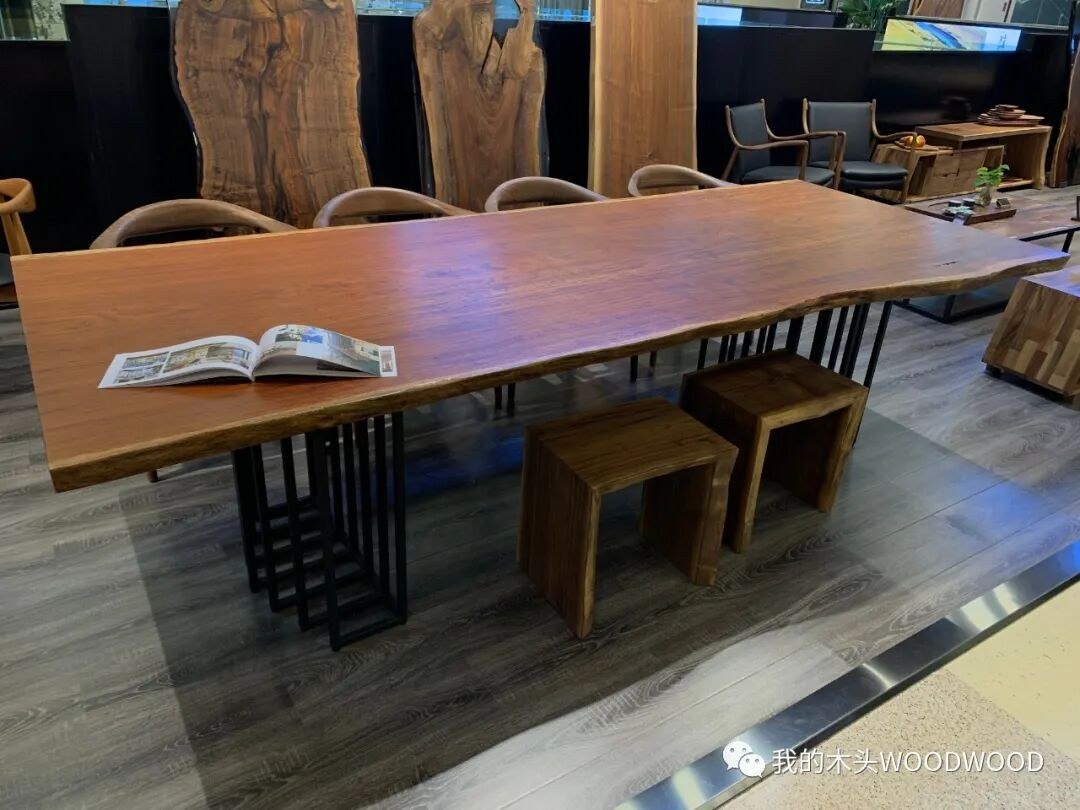
A finished My Wood Bubinga slab
Species easily confused with it:
1. Erythrophleum: yellowish-white heartwood, non-storied rays, and no ripple marks on flatsawn boards.
2. Afzelia: commonly sold as “merbau.” The wood is unscented, its surface marked by many long pores, with no ripple; on a polished cross-section the parenchyma appears wing-shaped, like a bird's eye.
3. Sub-rosewood: the term refers to other Pterocarpus species with a density below 0.76 g/cm³ — not necessarily African, and being African does not make a wood sub-rosewood. Spiny Pterocarpus is also popularly called “African rosewood,” but it is not the same thing.
A finished My Wood Bubinga slab
Bubinga differs from other slabs in two main ways:
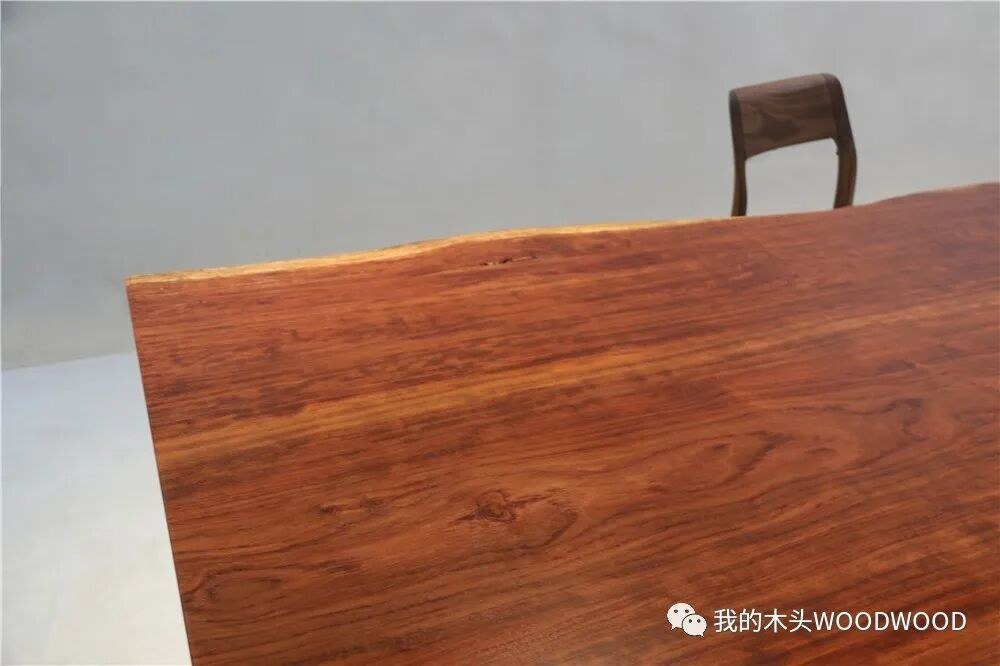
One: its diameter is immense and the boards are wide — often over a meter across, so large tables can be made with virtually no extra joining. That is rare on the market today.
Two: its varied, wholly individual figure is arguably its greatest selling point — in range and scale it is in no way inferior to Hainan rosewood.
Some boards resemble ghostly faces, some blaze with color, some are grand and commanding — all of it leaves many people captivated.
With a board of such strong character, a touch too much sheen looks vulgar, a touch too little leaves it dull. Preserving its native strengths while letting the finish merge with it perfectly is genuinely difficult.
A finished My Wood Bubinga slab
To bring out the strengths of the Bubinga slab to the fullest, the processing behind our slabs is different from the norm:
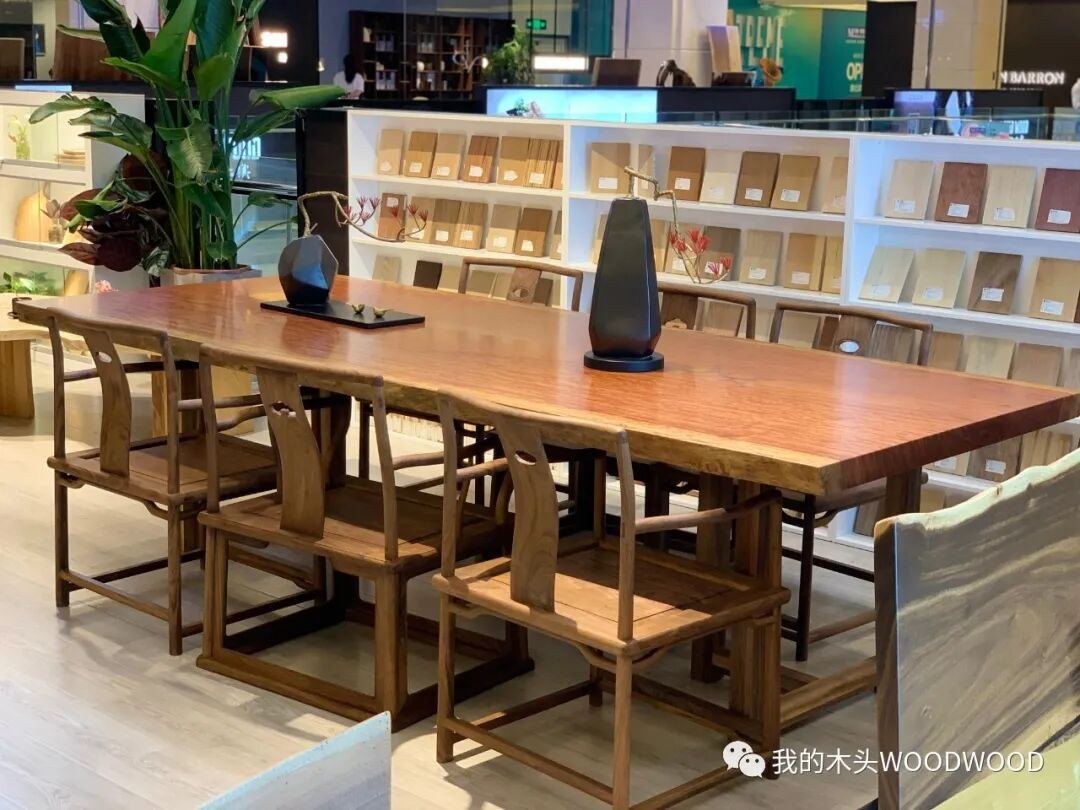
1. All moisture dried down below 12%:
As we have said before, timber at 15% moisture content may crack when placed in a warm, dry home or office; around 12% is a better figure.
2. Wood wax oil rather than a sealing lacquer:
An open-pore finish builds a thicker base coat that brings out the wood's pores and keeps its grain intact — run your hand over it and you feel the relief of raw timber, comfortable to the touch.
An open-pore finish brings the board closer to its natural state and heightens its sense of depth.
Duration
00:13
A finished My Wood Bubinga slab
These two points make useful criteria when choosing a Bubinga slab. Many sellers today, for convenience, neither bring the wood down to the proper moisture level nor hold back from sealing lacquer; under showroom lighting the difference is easy to miss, so it is worth looking closely and asking questions.
Industry insiders note that although Bubinga is not classified among China's national-standard rosewoods, its timber is close to them — and with rosewood in short supply, it can serve perfectly well as a substitute.
Yet Africa is steadily restricting timber exports, and with demand rising and overuse continuing, exports will inevitably shrink further — so the room for Bubinga to appreciate is naturally considerable.
A finished My Wood Bubinga slab
The “My Wood” app is officially live!
My Wood app
A wide selection of products
Introductions to many wood species
Product information updated in real time, so you can shop with confidence.
Search for “My Wood” in your phone's app store.

SEELAND WOOD LTD
B Block, Southern Ninth Street, Qiaotou Town, Dongguan city, Guangdong Province, China