WHAT ARE YOU LOOKING FOR?
WHAT ARE YOU LOOKING FOR?
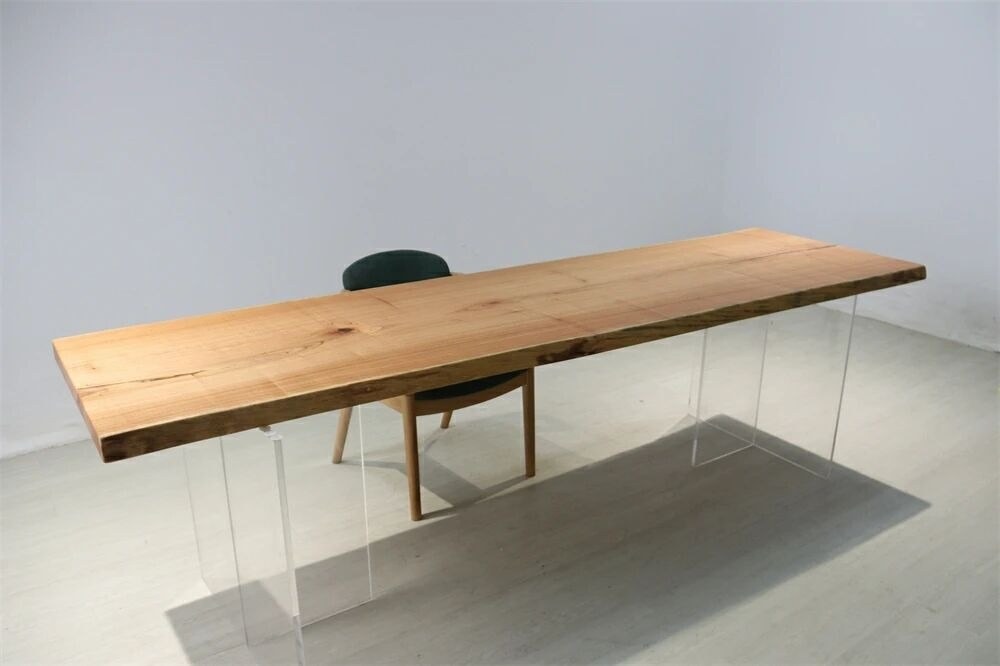
Wandering the Buddha's Grove, Writing the Way of Delight — Japanese Sandalwood
Rare solid wood slabs, made to order. Zhan tan, a transliteration of the Sanskrit candana, means "gladness in giving" — and India has long honoured it as the finest of fragrant woods.
Bespoke Rare Solid Wood Slabs
Zhan tan is a transliteration of the Sanskrit candana, carrying the sense of "gladness in giving". Since ancient times Indians have honoured it as the finest of fragrant woods.
The sutras record, for instance, that the writing board Shakyamuni used as a boy was cut from ox-head sandalwood — the finest of all sandalwoods — which came from Mount Malaya, so named because the peak resembles an ox's head.
As Buddhism spread, sandalwood became, without question, the first incense of the faith. Images of the Buddha carved from it are said never to decay, their fragrance lasting through the ages.
The most famous of them is a Guanyin that formed naturally in Indian sandalwood more than a thousand years ago (below), now enshrined at the highest place in the world — the Potala Palace.
The Principal Image of the Potala Palace
So highly does Buddhism regard sandalwood that temples themselves are often honoured as sandalwood groves.
In Buddhist usage it also carries a second name, written with a different character but read the same, meaning "to bestow joy" — to give people delight.
Most people, though, know it better by its everyday names: sandalwood, and white sandalwood.
Sandalwood
Chinese name: Zhan Tan
Also known as: Chan Tan, Sandalwood, White Sandalwood, Red Gold Sandalwood
Latin name: Lignum Santali Albi Santalum album L.
Kingdom: Plantae
Family: Santalaceae
Genus: Santalum
Origin: China, Taiwan, the southern Korean peninsula and Japan (in Japan chiefly Kyushu, Shikoku and Okinawa)
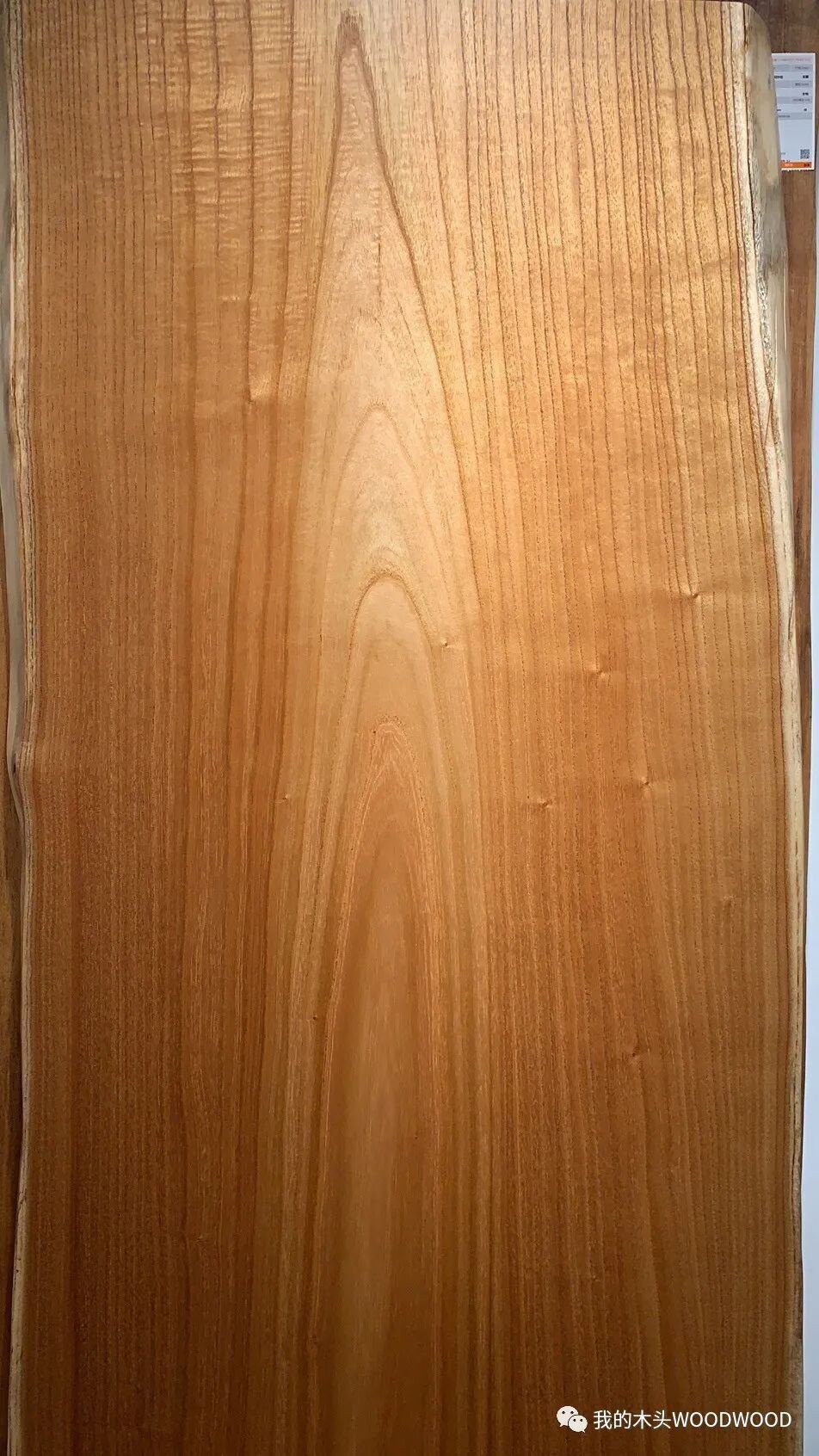
“My Wood” Sandalwood Solid Slab
Sandalwood is an ancient and rather mysterious tree, now rare and highly collectible.
It belongs, like agarwood, among the fragrant medicinals, but where agarwood is inward and reserved, sandalwood is a bright scent: it travels far more freely, and still manages to be fragrant at a distance and the cleaner for it.
“My Wood” Sandalwood Solid Slab
It grows mainly on hilly ground between 600 and 1000 m, with 600-1000 mm of rain a year, abundant sun, dry frost-free air, temperatures of 10-35 C, and iron-rich red soil.
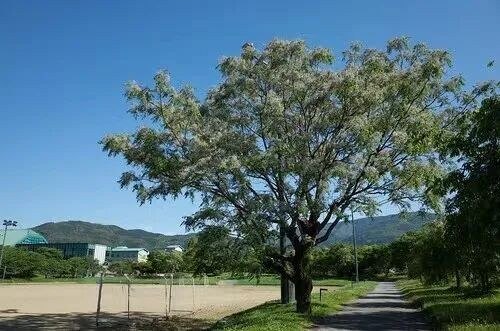
“My Wood” Sandalwood Solid Slab
The tree reaches roughly 5-20 m, and grows quickly.
Its limbs are thick and reach out on every side, giving a broad umbrella of a crown — or, as some describe it, a rounded mass with the soft clustered look of enoki mushrooms.
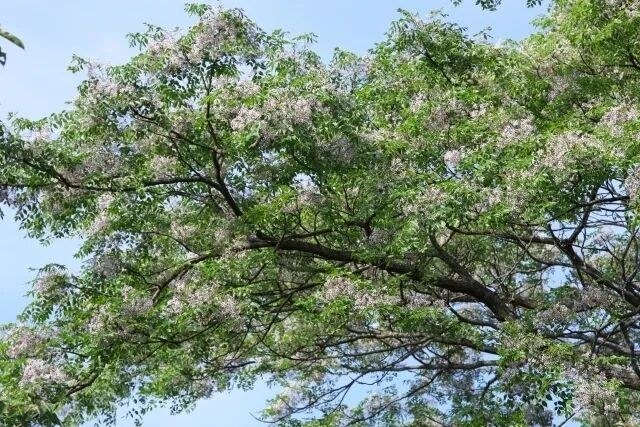
Young bark is dark green, marked with oval white lenticels; on older trunks it turns black-brown and splits lengthwise into pronounced ridges. (On summer afternoons the treetops fill with cicadas — look closely and you can see them feeding on the sap.)
The leaves are twice odd-pinnate and opposite, a single leaf often more than 50 cm long. Leaflets run 3-6 cm [6], pointed, egg-shaped to elliptical, thin in texture [16], with shallow serration along the margin and a few coarser teeth.
Early summer, around May and June, is its flowering season: petals white on the face, pale violet beneath. When dew gathers and falls among the stamens, even swallowtails come to taste the beginning of summer.
Fruiting waits for autumn, around October. Even after the leaves fall in late autumn the fruit hangs on at the tips of the branches, and is hard to miss. (It is rich in saponins, though: eaten by people or dogs it causes food poisoning, and a large dose can be fatal.)
“My Wood” Sandalwood Solid Slab
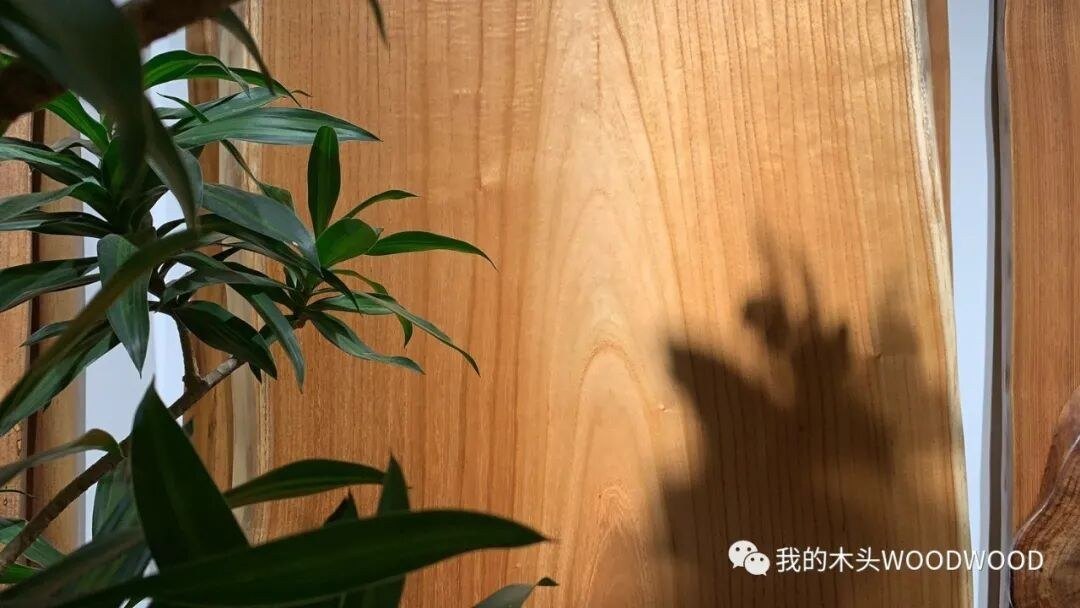
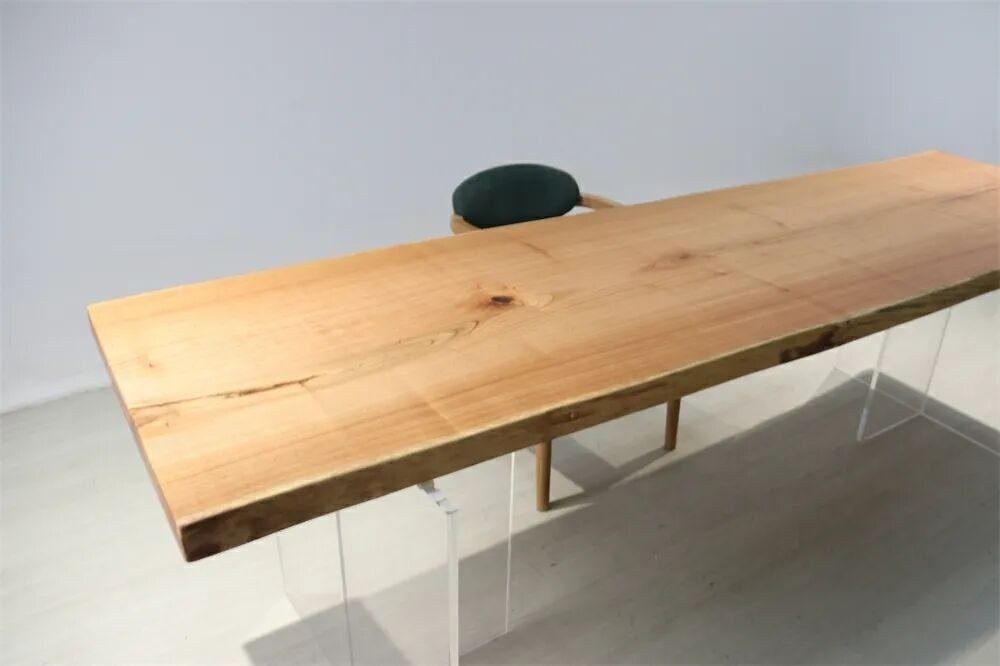
The wood carries a faint, quiet scent. Cut it open and the sapwood shows yellow-brown, the heartwood a paler yellow-brown, the line between them barely marked — a soft bleed of colour that many people never quite forget.
“My Wood” Sandalwood Solid Slab
The grain interlocks slightly and is a little coarse; hardness and strength are high, yet it works reasonably well.
It is often used as a substitute for Japanese zelkova, and as furniture and building stock its resistance to water comes further into its own.
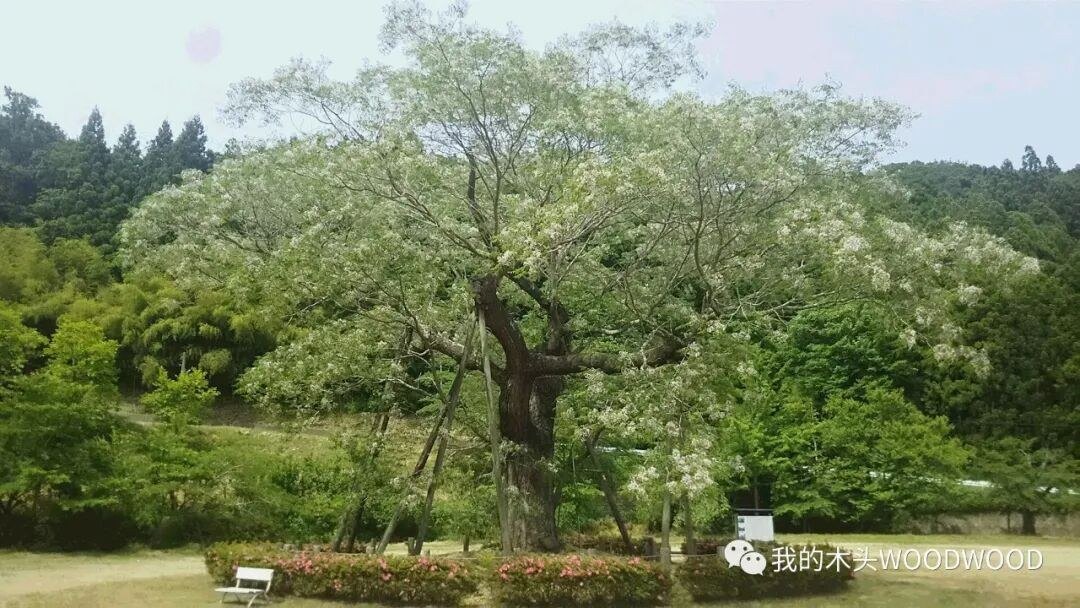
They say this sandalwood tree stands on the site of the old Nishine elementary school in Japan.
Estimated age: 144 years
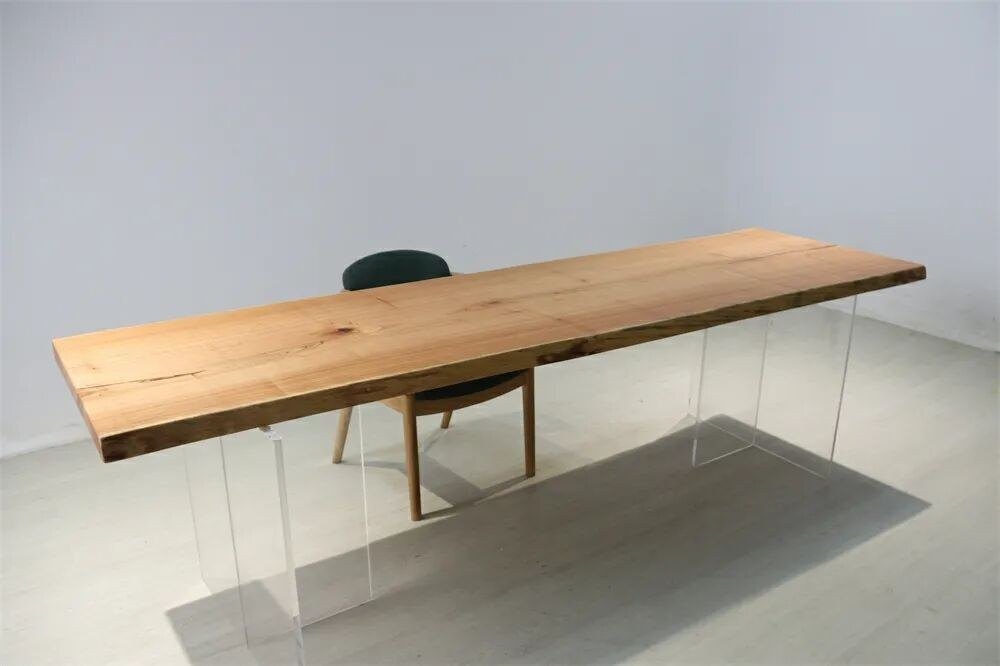
Japanese sandalwood slabs are selling well at My Wood right now — come and see them on our website or in store.

SEELAND WOOD LTD
B Block, Southern Ninth Street, Qiaotou Town, Dongguan city, Guangdong Province, China