WHAT ARE YOU LOOKING FOR?
WHAT ARE YOU LOOKING FOR?
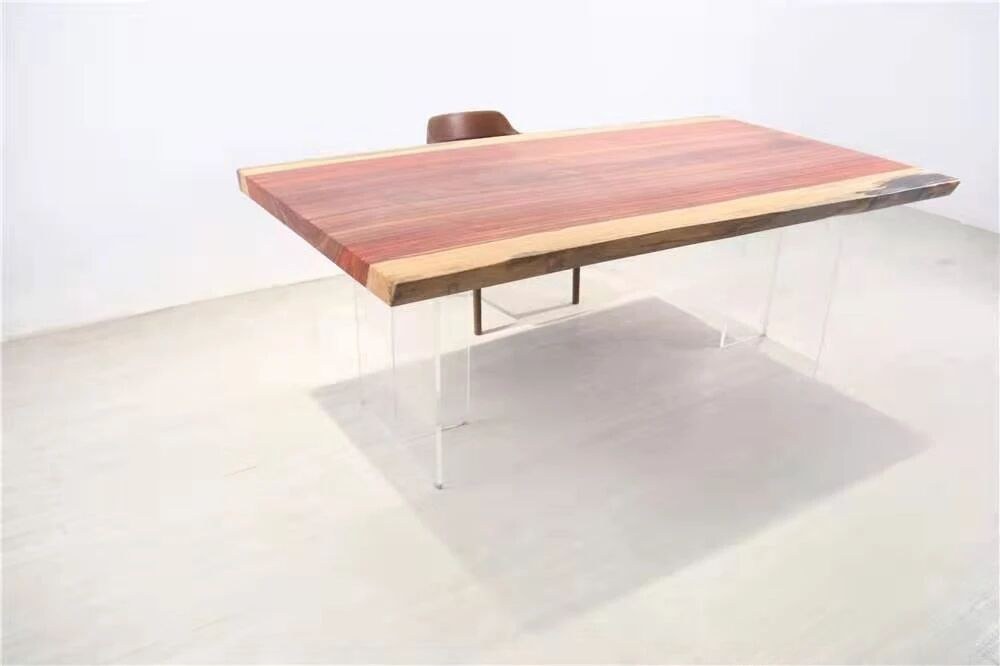
Reserved and Classical, the Chameleon of Woods — African Padauk
Rare solid wood slabs, made to order. Vivid red carries a meaning out of the ordinary for us — it is the colour of celebration, and of peace.
Bespoke Rare Solid Wood Slabs
Vivid red carries a meaning out of the ordinary for Chinese people.
A thousand years of culture have settled into it, handed down generation after generation; we have entrusted far too much feeling to this colour. It is festivity and bustle; it is also happiness and peace.
So whatever the fashions do, a deep red board still holds its ground in the home.
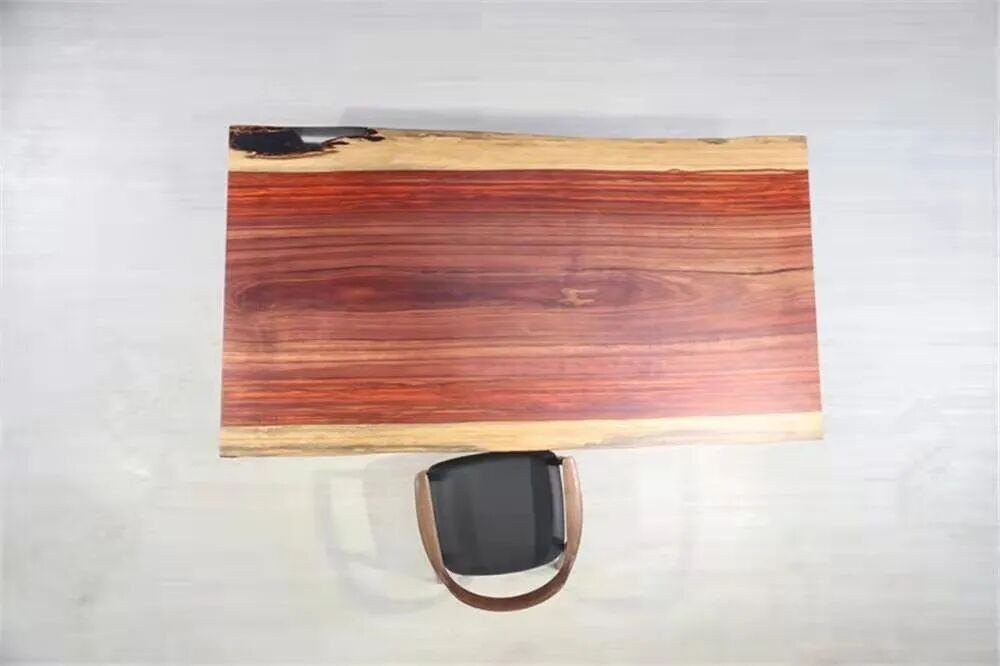
Padauk, for instance.
“My Wood” Padauk Slab Table
Its dense, immediate red is unforgettable. Won over by the looks, kept by the character: that sums up its beauty about right.
Padauk
Common name: Honghuali (Red Flower Pear)
Chinese name: African Rosewood, Soyo Padauk, Soyaux's Padauk
Latin name: Pterocarpus soyauxii
Family group: Papilionoideae
Family: Fabaceae
Genus: Pterocarpus
Air-dry density: 0.67~0.82 g/cm3
Padauk belongs among the rosewood-bearing trees. In China it grows mainly south of the Yangtze, where it is also called jiangxiang sandalwood.
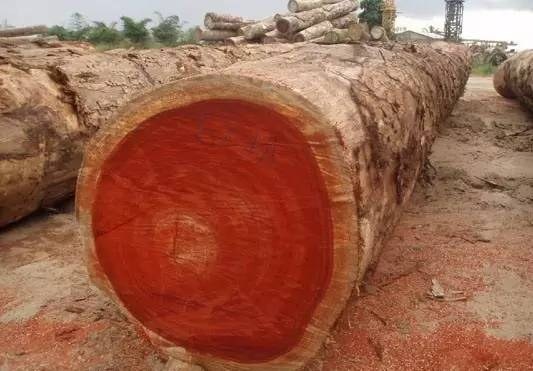
It occurs elsewhere in the tropics too, chiefly in Southeast Asia, South America and Africa.
Today China imports it mainly from Cameroon, Gabon and Congo in Central and West Africa.
Padauk and Hongmu
Because the colour is so red, many people called it hongmu before the national standard for rosewood was issued.
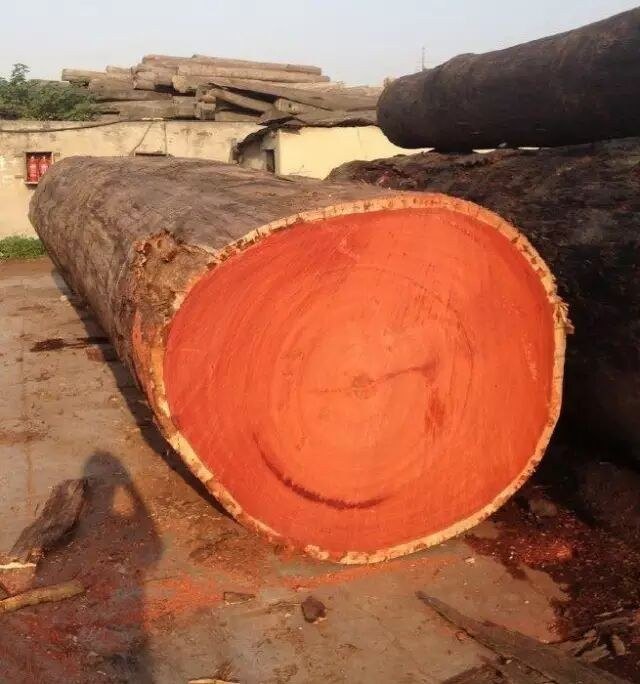
In fact red flower pear is only a trade name; strictly speaking, it falls outside the hongmu category.
The quickest way to tell padauk from true hongmu is to compare weight.
Heft two pieces of the same size, one padauk and one rosewood that meets the national standard, and you will find the padauk is very much the lighter of the two.
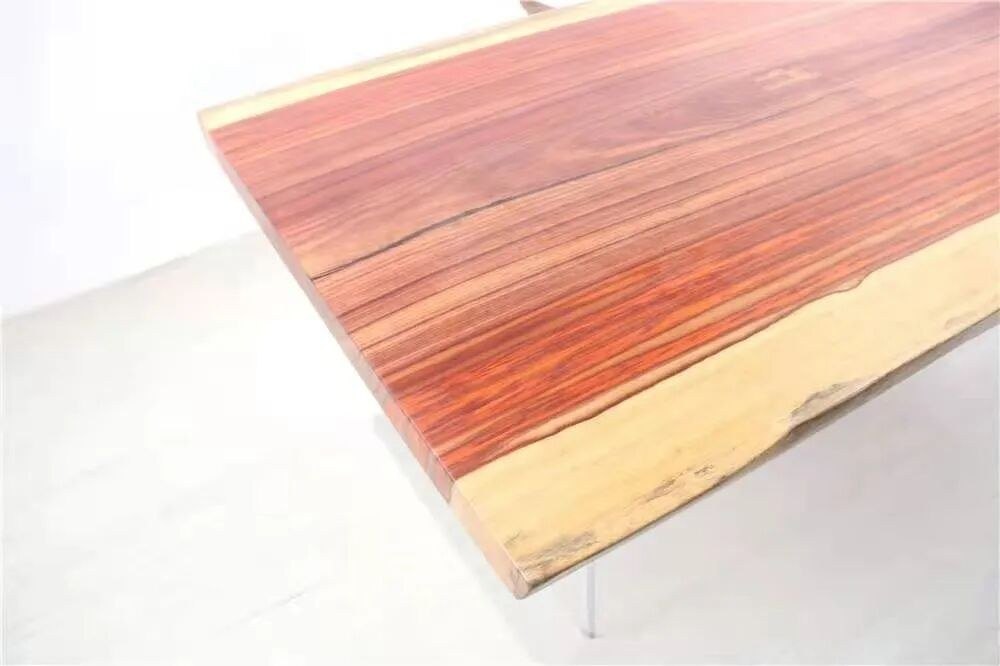
“My Wood” Padauk Slab Table
It may sit outside the national hongmu standard, but as one of the 101 dark precious hardwoods listed under Dark Precious Hardwood Furniture, it remains well regarded and popular — and plenty of high-end furniture and structural material is made from it.
Shanghai's Baoshan Temple, with five hundred years of history, used it in quantity for its new monastery.
The layout follows the traditional axial plan of a Buddhist monastery, in the palatial style of the late Tang, built entirely of African padauk with mortise-and-tenon joinery — disciplined in structure, plain and generous in manner.
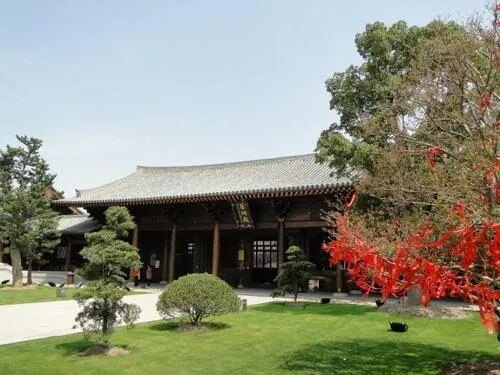
Baoshan Temple, Shanghai
What Makes Padauk Different
1. The heartwood shifts a great deal in colour: blood red when freshly cut, turning purple-brown within a short time under light. The sapwood is grey-white, pale yellow-brown or the colour of oatmeal, usually 5-6 cm wide, and narrower the larger the log.
2. Straight, round, long and thick, the logs yield a very high proportion of usable timber.
3. Durability is excellent; sawn stock keeps well and resists termites strongly. Once dried, the boards are exceptionally stable — in the damp south or the dry north, they seldom crack or move.
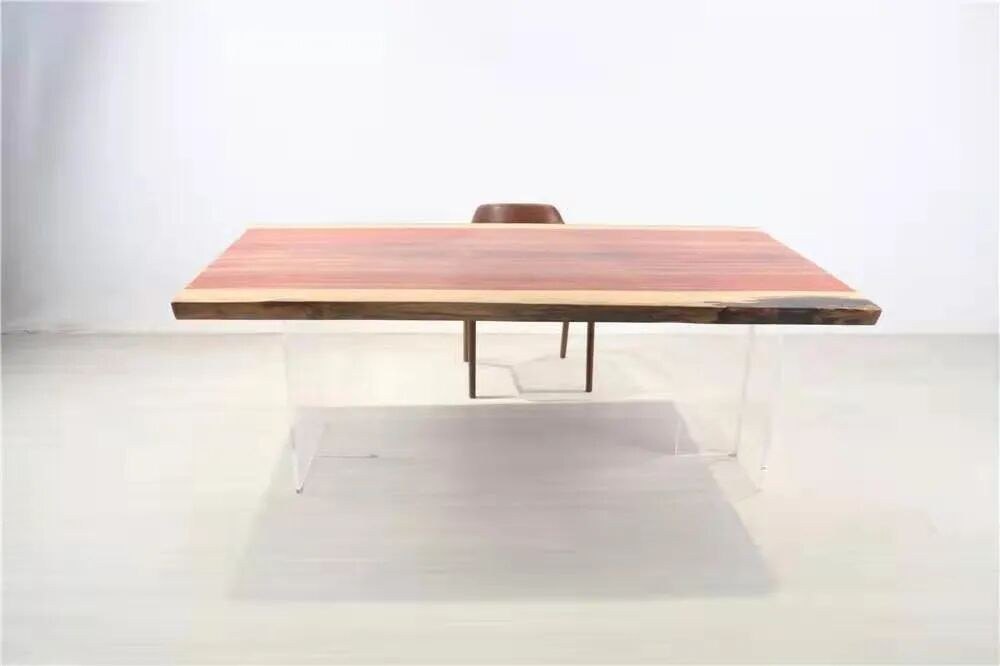
“My Wood” Padauk Slab Table
4. With time the first brilliant red deepens into a classical, sombre crimson — very much the reserved, gentle temper of the East.
5. Light plays strongly on a cut face and the grain reads clearly; look closely and a faint fluorescence seems to hover within it, quite unlike anything else.
6. Beyond furniture and building material, padauk is a source of essential oil, credited with easing pain, lifting low mood, fighting bacteria and fungi, clearing the head, removing odour and repelling insects.
“My Wood” Padauk Slab Table

SEELAND WOOD LTD
B Block, Southern Ninth Street, Qiaotou Town, Dongguan city, Guangdong Province, China